
After waking up with itchy spots, you pull back the fitted sheet and notice a dark speck along the mattress seam. How do you know if you have bed bugs? Bites and a single spot cannot confirm them. Identifying a suspected insect gives you much stronger evidence.
If you find an insect, text us a clear photo for free identification help. Once we identify a bed bug, we can usually discuss treatment without a separate inspection. If you have itchy marks but have not found a bug, call for a free phone consultation so we can talk through what to check next.
What can bites actually tell you?
When a Milwaukee resident calls, we ask, “What makes you think you have bed bugs?” If your answer is “I keep waking up with itchy marks,” tell us that. Note when the marks first appeared, whether they have returned, and where you usually sleep. Even if they seem to recur every 5 to 10 days, that timing does not establish the cause.
If the marks appeared after a hotel stay, mention when you traveled and where you unpacked. The date the marks appeared doesn’t establish where you encountered the insect. A photo of a skin reaction may be useful to a healthcare professional. For pest identification, try to photograph the insect itself.
What should you look for around the bed?
Start within reach of the spot where you sleep. Our bed bug identification FAQ points to seams and joints that are easy to overlook. Use a flashlight to follow the stitched edge of the mattress, look beneath the mattress tag, and check the visible joints where the bed frame meets the headboard. If you regularly doze in a recliner, check the accessible seams around its cushions, too. Leave heavy furniture in place and work with what you can see.
Recognize a possible bed bug
An unfed adult is flat, oval, and brown, about the length of an apple seed. After feeding, it can look longer and redder. Young bed bugs are smaller and can be pale enough to miss against light fabric. Compare the outline and proportions of the insect you found with the adult pictured here. The EPA’s guide to bed bug appearance also describes what to look for at each stage of growth.
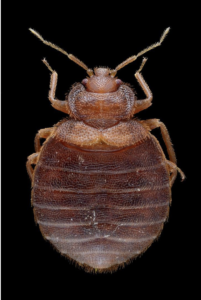
Source: flickr
How do you know if you have bed bugs when all you see are stains?
A stain alone can’t confirm bed bugs. Look along the same seam for other clues, such as tiny whitish eggs, pale shed skins, or a live insect. The EPA’s guide to finding bed bugs describes dark fecal spots that resemble ink dots and rusty stains that can result from a bug being crushed. Take a photo before wiping the surface so someone else can see the pattern and location.
The age of marks on a mattress is hard to judge by sight. A live insect found beside them provides stronger evidence of current activity. If you cannot find one, note the places you checked and widen the search to nearby furniture. Wisconsin’s Bed Bugs in Wisconsin guide identifies cracks in nightstands as another possible hiding place.
How can you take a photo we can use?
If you can catch the insect, place it in a small, clear container and close the lid. An intact specimen is easier to identify. Set the container on a plain surface in good light, then aim your phone straight down. If the insect looks blurry, pull the phone back a little and tap the insect on the screen to refocus.
Take one picture that shows its shape and a second that shows its size beside a ruler or coin outside the container. Open the photo before sending it. Can you make out the outline and legs? A sharp, slightly wider photo usually gives us more to work with than a blurry close-up. Send the original image and include the room, the date, and where you found the bug.
If the insect gets away, send the best photo you have and describe where you saw it. “On the seam of my reading chair” gives us a specific place to suggest checking again if the picture is inconclusive.
When would an inspection help?
A separate inspection is not routinely needed to start the conversation. We can first discuss the signs during a free phone consultation or look at a photo of a suspected insect. An on-site visit may help only if those steps leave an important question unresolved.
- A clear photo of an identifiable bed bug. Once we confirm the insect, we can usually discuss bed bug treatment, including which rooms are affected and who can authorize service. A separate identification visit is often unnecessary.
- A blurry photo, a shed skin, or an unexplained stain. Ask what other evidence would help identify the source. A clearer photo of a suspected insect may be enough. If uncertainty remains, discuss what an on-site inspection could establish and whether there is a charge.
- Recurring bites and no physical signs. Call and tell us what you’ve noticed. We can help you choose where to look next and discuss whether a visit would be worthwhile. You don’t need to wait until you catch a bug to ask for guidance.
If dark spots keep reappearing at the same bed frame joint, photograph the area before cleaning it and note the dates. Share those images during the phone consultation so we can suggest a useful next check. If a visit might resolve the uncertainty, ask what the technician would examine and what it would cost.
What should a renter do with the answer?
If you rent in Milwaukee County, send your property manager a brief note explaining what you found and where in your unit you found it. Include your unit number, the date, and whether an insect has been identified. Keep the original photo. If the building has a bed bug pest control provider, ask who should receive the photo and coordinate access if treatment is needed.
If you are looking for affordable bed bug pest control, first ask your property manager who can authorize service. That helps avoid paying for a visit the building may already have arranged. Once a bed bug is identified, ask your bed bug exterminator how bed bug heat treatment compares with other options for your unit. If they recommend Aprehend bed bug treatment, ask which treated areas must not be cleaned or wiped so the residual barrier stays in place.
FAQs about bites and lookalikes
1. How do you know if you have bed bugs when your partner has no bites?
Look for an insect or physical signs near the bed you share. According to the CDC’s guide to bed bug bites, one person can have visible marks and another can have no skin reaction. Neither person’s skin settles the question. You can call to talk through the bites even if you haven’t found a bug.
2. What if the insect in my photo is a carpet beetle?
The EPA lists carpet beetles among the insects people mistake for bed bugs. If the insect in your photo is identified as a carpet beetle, that find alone is not evidence of bed bugs. Save any different insect you discover or send a new photo so it can be identified separately.
Talk through what you found in Milwaukee
Still wondering, “How do you know if you have bed bugs?” Focus on evidence you can document, not just a pattern of marks. For free identification help, text us a clear photo of a suspected insect. If you have nothing to photograph, call Affordable Bed Bug Exterminators at 414-446-3030 for a free phone consultation. Once we identify a bed bug, we can usually discuss treatment and provide a free quote without a separate inspection.